Cosmic Instruments
Curatorial Framing
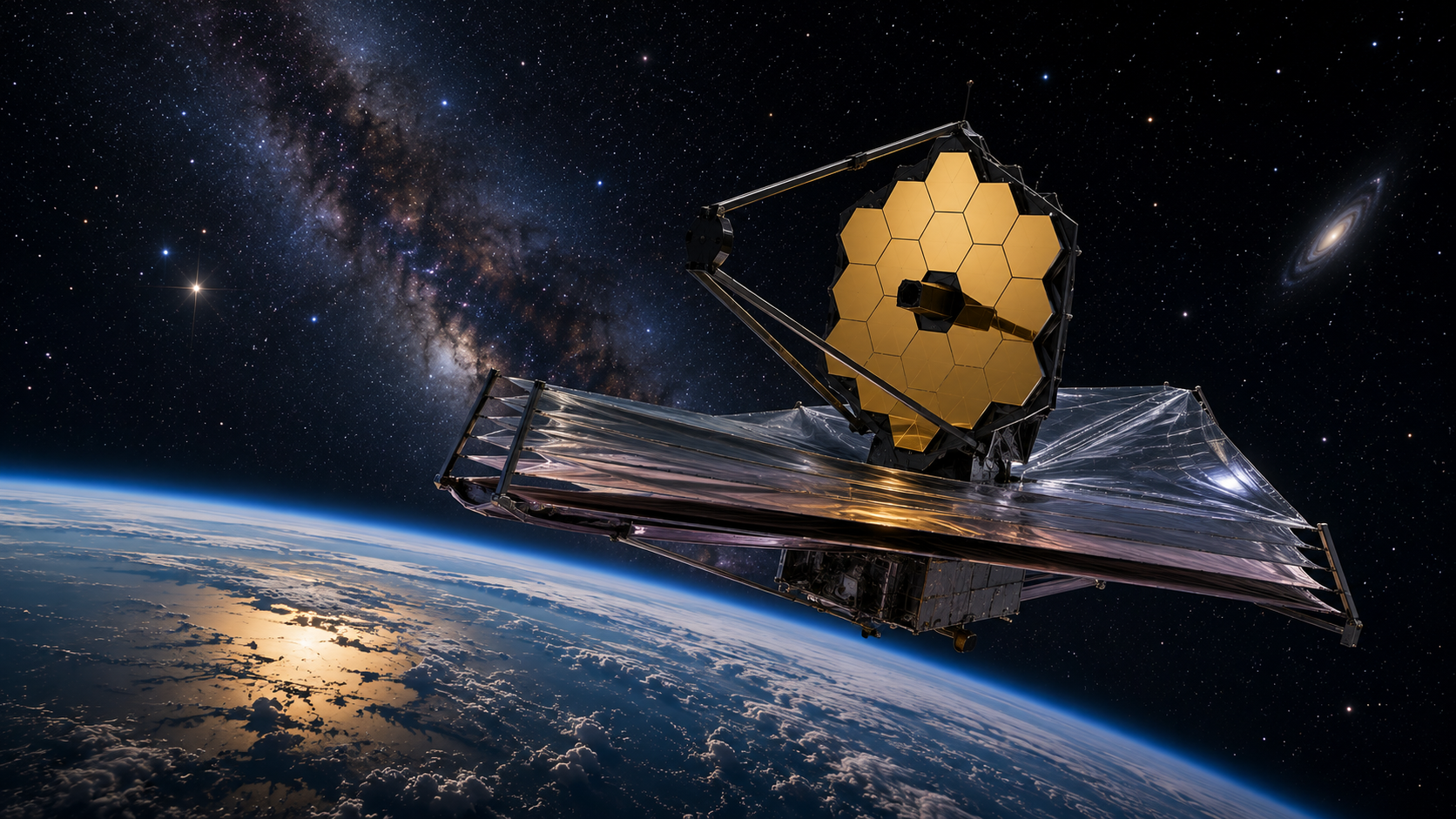
Cosmic Instruments marks a structural transformation in how astronomy produces truth. Observation no longer depends on a single site or wavelength. Instead, it becomes a coordinated infrastructure of orbital telescopes, terrestrial arrays, and data systems that combine many forms of evidence. This era is less about one device changing everything and more about interoperability across instruments.
The curatorial thesis is straightforward: when telescopes moved beyond atmospheric limits and beyond visible-light dependence, the universe became both broader and more precise. New spectra exposed phenomena that earlier observers could not detect, while linked observatories increased temporal and spatial continuity. Astronomy became a networked reading practice.
"The modern shift is not one telescope replacing another, but many instruments becoming one evidence system."
Orbital Shift
Launching telescopes into orbit answered a long-standing Earthbound problem: atmospheric distortion and absorption. In space, instruments avoid much of the blur and filtering that complicate ground observation, enabling cleaner signals and longer uninterrupted sessions. The change is not simply visual sharpness. It is methodological stability across time, especially for faint and distant targets.
Orbital systems also changed institutional collaboration. Mission planning required coordination among engineers, scientists, agencies, and international partners long before a telescope produced its first image. This expanded telescope history from optical craft into mission architecture. The museum story should therefore include operations, maintenance windows, and calibration cycles, not only iconic output images.
Spectrum Expansion
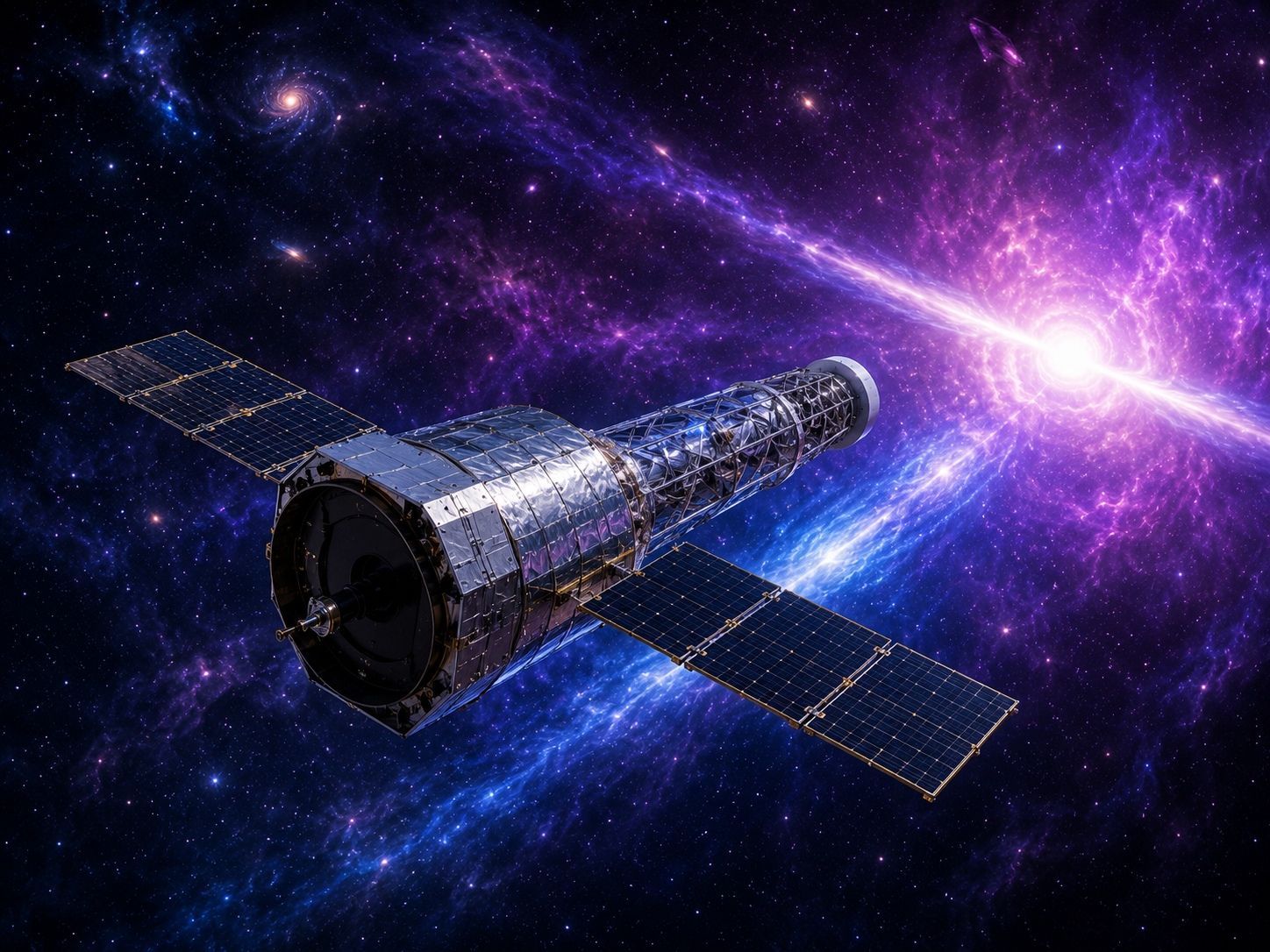
Reveals thermal structure and dust-obscured regions invisible to optical telescopes.
Maps high-energy events and extreme environments around compact objects.
Tracks large-scale structures and emissions not detectable in visible wavelengths.
One of the defining achievements of this era is the move beyond visible light into infrared, X-ray, radio, and other bands. Each spectrum reveals different physical processes: thermal structures, high-energy events, magnetic interactions, and signatures of material otherwise hidden to the human eye. Together, these bands produce a layered account of cosmic phenomena.
Spectrum expansion also introduces interpretive complexity. Data is often translated into color mappings that support analysis, which can create tension between scientific convention and public expectation. A strong curatorial approach explains that images are not deceptive but interpretive instruments themselves, designed to make non-visible information legible. This is where museum education and scientific literacy intersect most clearly.
Instrument Stack
Landmark Instruments
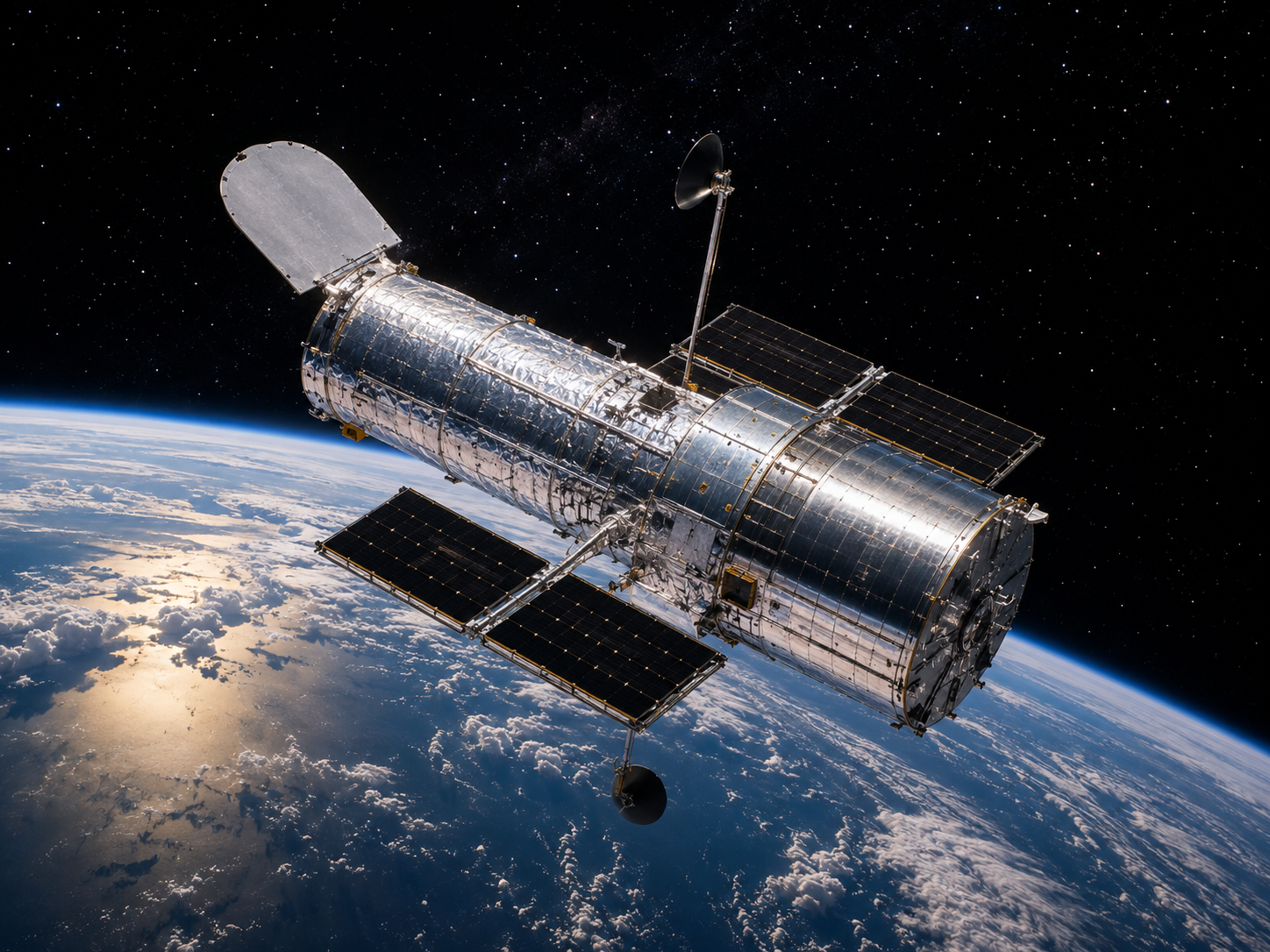
Orbital clarity
Hubble Space Telescope
A long-duration orbital observatory that made high-resolution space-based observation central to modern astronomy.
High-energy evidence
Chandra X-ray Observatory
A precision X-ray mission that made extreme environments and compact-object physics more visible.
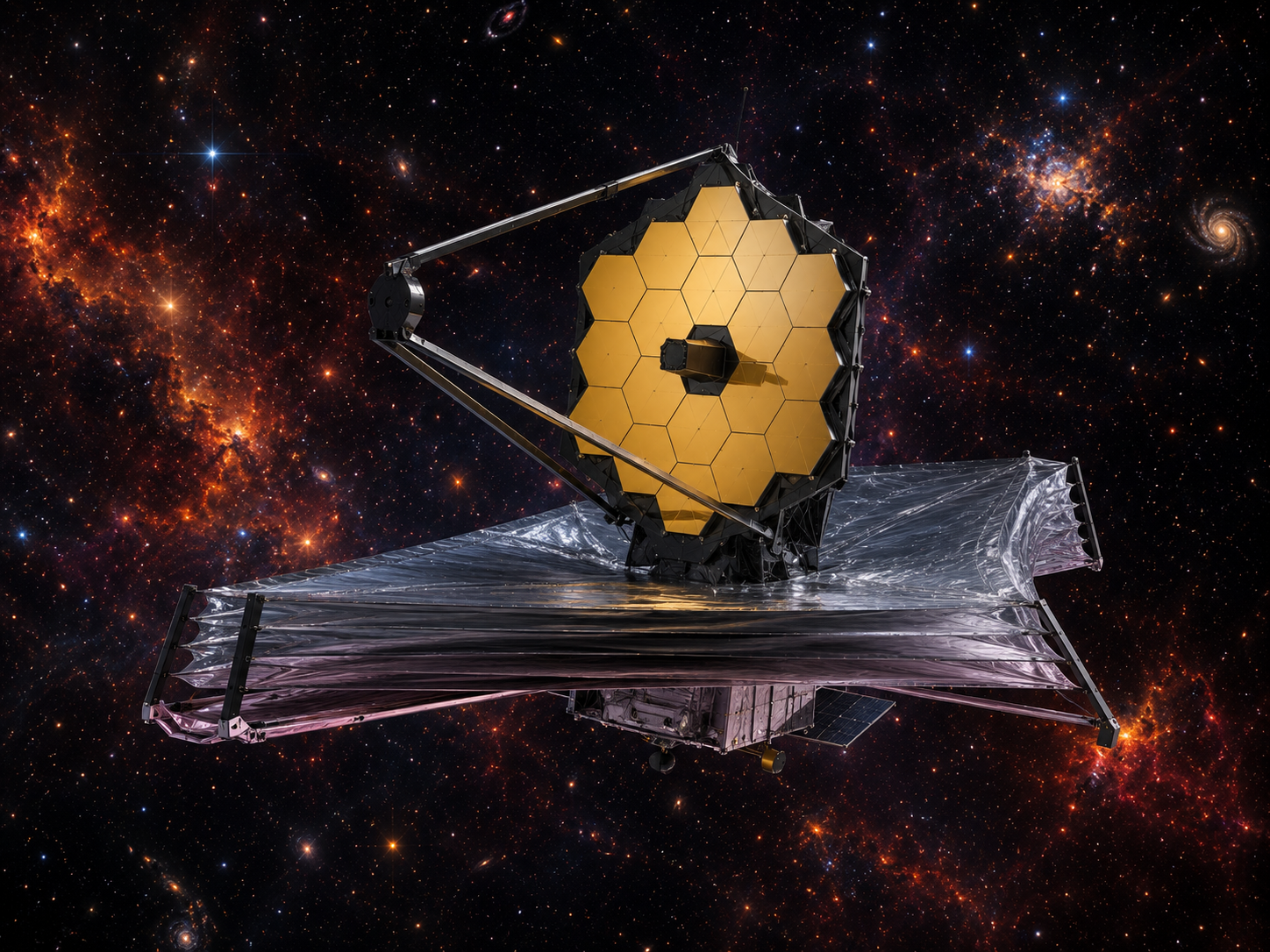
Deep infrared sensitivity
James Webb Space Telescope
A segmented infrared observatory built to study early galaxies, star formation, and planetary chemistry.
Distributed observation
Event Horizon Telescope
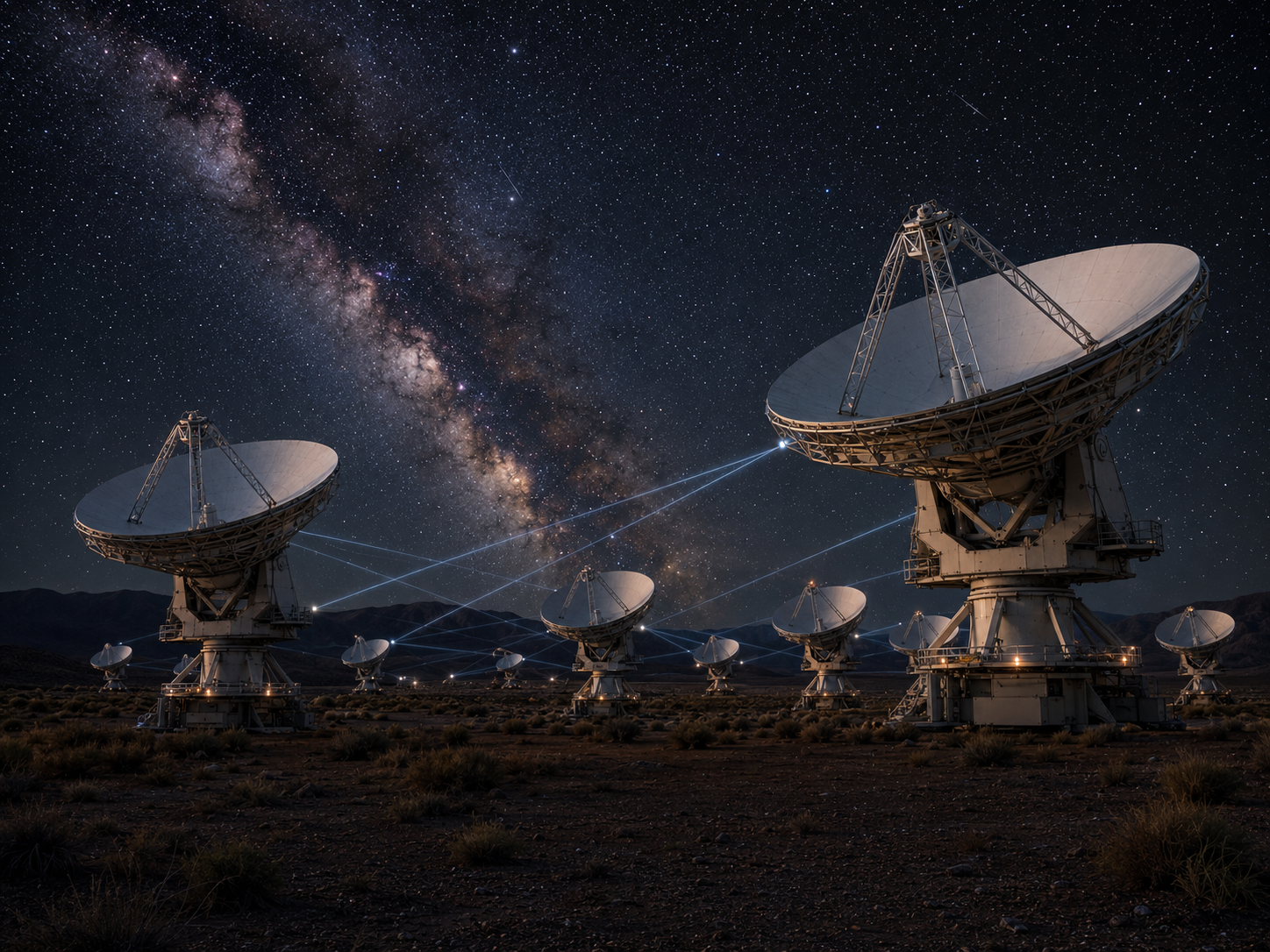
A global array that showed how separate observatories can operate as one planetary-scale instrument.
Networked Observatories
Modern astronomy increasingly relies on networked observatories that coordinate observations across continents and platforms. Interferometry, synchronized scheduling, and shared protocols allow multiple telescopes to behave as a single larger instrument. This networked model improves coverage, triangulation, and confidence, especially for transient events or complex targets.
The cultural implication is significant: no single institution can fully claim ownership of contemporary cosmic evidence. Discovery now depends on interoperability, open standards, and collaborative interpretation pipelines. Curatorially, this reframes progress as collective capacity rather than isolated genius.
Debate at the Time
Prestige Instrument vs Networked Evidence
Breakthrough authority should remain tied to singular iconic instruments.
Coordinated arrays and shared data standards now produce the most reliable and reproducible findings.
Landmark Missions
Landmark Missions and Outcomes
The following milestones illustrate how mission diversity expanded both method and meaning in this era.
Hubble Begins Space-Based Observing
The Hubble Space Telescope launched in 1990 and transformed modern astronomy with high-clarity orbital observations.
Chandra Advances X-Ray Astronomy
Chandra used precision iridium-coated mirror assemblies to observe high-energy X-ray sources.
Event Horizon Telescope Images a Black Hole
A global telescope array produced the first direct image of a black hole environment.
James Webb Extends Infrared Reach
JWST launched in 2021 with a segmented 6.5-meter mirror and deep infrared sensitivity.
Open Questions and Future Threshold
Despite major advances, this era is defined as much by unresolved questions as by solved ones. How should evidence from different spectra be weighted when interpretations conflict? How can long-term observatory collaborations remain sustainable under changing political and funding contexts? Which unknowns require entirely new instrument classes rather than better versions of existing ones?
The future threshold likely depends on maintaining three linked commitments: precision in measurement, transparency in data pipelines, and collaboration at planetary scale. These themes connect directly back to Era 1. The difference is magnitude. What began as a local struggle over reliable seeing has become a global system for coordinated interpretation of the cosmos.
Questions Guiding the Next Era
- How should cross-spectrum evidence be weighted when interpretations conflict?
- Which observatory collaborations remain sustainable over multi-decade timescales?
- What observations require new instrument classes rather than incremental upgrades?